Unbound
The Story Behind the Story
Part One - Escape
As I always say, every story has a story, and Unbound is no exception.
I've mentioned before that I never set out to write a novel, let alone become a published author. My intention was much more personal. I wanted to express feelings and emotions about my life that I'd carried with me for far too long. Writing became a way to revisit my past, put certain experiences into perspective, and, perhaps most importantly, finally leave them behind.
I'd come to realize that I was spending too much time looking backward, revisiting old resentments and regrets instead of fully appreciating the life I had built. It was time to make peace with the past and embrace the happiness I'd found. But to understand how Unbound came to be, we need to go back to where my own story began.
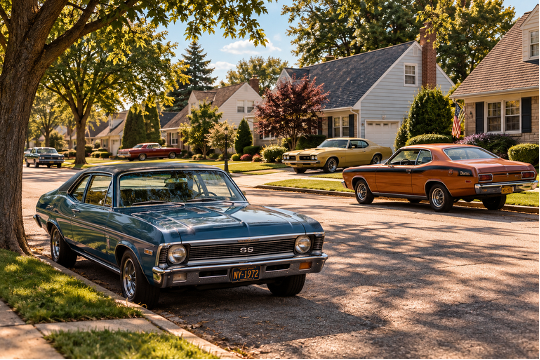
I grew up in Levittown, on Long Island, New York. In the 1970s, it was a predominantly white, Christian, middle-class suburban community that, on the surface, seemed like an ideal place to grow up. And in many ways, it was. We didn't have the technology or endless entertainment options kids enjoy today, but we didn't know what we were missing. We made our own fun. There were beaches nearby, New York City was just a short drive away, and backyard swimming pools seemed to be everywhere. The music, movies, television, and cultural changes of that era made the seventies an especially memorable time to be young. To this day, I still consider it one of the greatest decades. Life should have been grand. But behind every front door, there's another story.
From a very young age, I knew I was different. I distinctly remember feeling attracted to other boys, although I couldn't explain or fully understand those feelings until I was older. As I entered my teenage years and puberty brought those feelings into sharper focus, life became increasingly complicated. Unfortunately, growing up in a dysfunctional household offered little of the understanding or emotional support I desperately needed. My conservative Catholic parents were dealing with their own unresolved turmoil, and the societal expectations of the time left little room for someone like me to question, much less openly embrace, his sexuality. I wasn't simply living in the closet. I was struggling with my identity while trying to navigate a deeply troubled home life. Those circumstances began affecting nearly every aspect of my adolescence. I withdrew academically and, in some ways, socially. School held little interest for me beyond spending time with friends. I neglected my studies, skipped classes, and became increasingly defiant. I pushed the boundaries of delinquency as far as I dared, until my old man laid down the law—or, more accurately, his hand. Looking back, I can see how much of that behavior grew out of frustration, confusion, and a sense of helplessness I didn't know how to express.
As graduation approached, the turmoil at home only intensified. My father's control and abuse were becoming more difficult to endure, while my suppressed feelings about my sexuality added another layer of fear and uncertainty. There were friends I suspected might be struggling with feelings similar to my own. At times, I sensed the possibility of a connection that went beyond friendship. But I never allowed myself to pursue it. I feared rejection, feared that I might have misread their feelings, and, perhaps most of all, feared what would happen if my parents discovered the truth about me.
What made those years especially difficult was the intensity of feelings I had no safe way to express. Like any teenage boy, I was discovering the powerful emotions and desires that come with adolescence. But unlike many of my friends, I couldn't openly pursue the affection and intimacy I longed for. I wanted to know what it felt like to kiss another boy, to hold him close, and to experience the simple happiness of having those feelings returned. There were moments when I believed that possibility was within reach, yet fear always held me back. That frustration became almost overwhelming at times. I wasn't only struggling against the restrictions of my home life and the expectations of society. I was struggling against my own desires, afraid of what might happen if I finally gave in to them. In a strange way, my growing determination to leave home was also an attempt to escape the very feelings I couldn't allow myself to embrace. The expectations of family, religion, and society had created a world in which being myself seemed almost impossible. At that age, I couldn't imagine how things might improve. My thoughts were focused less on finding happiness than on preventing life from becoming even worse.
Today, with the benefit of hindsight, I understand that it didn't have to be that way. Things could have been different. That realization would eventually become one of the most important inspirations behind my writing. But it would take many years before I was ready to confront those memories and give them a place in a story.
At sixteen, I was concerned with something far more immediate. I had begun to recognize that if I stayed where I was, the direction of my life would continue to be determined largely by my father's control and the circumstances surrounding me. I wanted the opportunity to make my own decisions, discover who I was, and build a life that belonged to me. And so, I began plotting my escape. It wasn't simply a teenage fantasy about leaving home. In my mind, it was a genuine plan to walk away from the only life I'd ever known and start over somewhere else. I can still remember the determination I felt at sixteen years old. For the first time, I wasn't just wishing my life could change. I was beginning to figure out how to change it.
Part Two - Identity
As I planned my escape, I entered what I like to remember as a period of savoring what remained of my teenage years. I enjoyed every moment I could with my friends, but there was something bittersweet about those final two years. Deep down, I knew that once I left Long Island, I probably wouldn't return. I wasn't simply preparing to leave home. I was preparing to leave an entire life behind.
Once I began meeting with Air Force recruiters, I became convinced that the military offered exactly what I needed: a fresh start, independence, and the opportunity to build a future on my own terms. From that point forward, there was no turning back. My only real reservation was basic training. Could I handle it? Could I endure the physical and mental demands of boot camp? My recruiter certainly thought so. In fact, I remember him practically guaranteeing that I wouldn't have any trouble. Looking back, it's almost amusing that my biggest concern was whether I could survive the training itself. You might think that a closeted gay teenager preparing to enter an overwhelmingly male environment would have had a few other things on his mind. Believe it or not, I really didn't. At least, not until one particular afternoon.
I was hanging out with my best friend, enjoying one of those ordinary teenage moments that I knew would soon become memories. We were sitting on the loading dock behind a row of stores, smoking a joint and talking about what awaited me in boot camp. At one point, as he passed me the joint, he casually remarked, "Man, you're gonna have to shower with a bunch of other guys."
That thought hit me like a ton of bricks. Somehow, in all my planning and anticipation, the communal showers had never occurred to me. Suddenly, I was imagining myself standing shoulder to shoulder with a roomful of naked young men. For a teenager who had spent years suppressing his attraction to other guys, it was quite a revelation. But I wasn't about to let that derail my plans. I convinced myself that I'd simply keep my eyes to myself, concentrate on getting through the experience, and move on. Well, that turned out to be easier said than done.
When the time came, I discovered that curiosity could be remarkably persistent. It wasn't so much about sexual attraction as it was the natural urge to look, to compare, and perhaps to satisfy a curiosity I'd never allowed myself to acknowledge. Once that initial curiosity passed, I managed to put it aside and focus on the six demanding weeks ahead.
Leaving home had been an extraordinary mixture of emotions. I was thrilled to be escaping the environment that had made my teenage years so difficult, yet frightened by the uncertainty of what awaited me. Freedom and fear were arriving together, and I wasn't entirely sure which one I felt more strongly.
To say that basic training was a culture shock would be an understatement. Those first two weeks were especially difficult. But gradually, the routines became familiar, the demands more manageable, and my determination even stronger. I had one objective: succeed. Endure whatever was necessary, graduate, and begin the independent life I'd dreamed about for so long.
And I did.
For a while, I believed I'd finally found my freedom. But it didn’t take long for me to recognize an uncomfortable truth: I’d traded one kind of confinement for another.
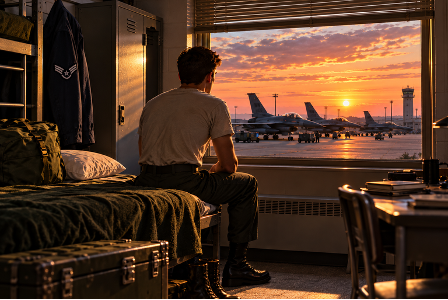
The military had given me independence from my family, structure, opportunity, and a sense of purpose. But it was also an institution in which acknowledging my sexuality could jeopardize everything I'd worked to achieve. And I knew it. Unlike my teenage years, when I was struggling to understand my feelings while navigating my parents’ expectations, I was now acutely aware of what I needed to conceal. I couldn’t afford even the slightest suggestion that I was attracted to other men. Every interaction required a certain degree of caution, an awareness of what I said, how I behaved, and what others might perceive. I had escaped the control of my childhood home, only to discover that the freedom I’d worked so hard to achieve came with its own restrictions. It was absolutely stifling. And just as I'd done growing up, I buried those feelings. Only this time, I buried them so deeply that I managed to convince even myself that I could live without acknowledging them. Years passed, and I became remarkably skilled at avoiding the questions I didn't want to answer.
Then came the 1990s.
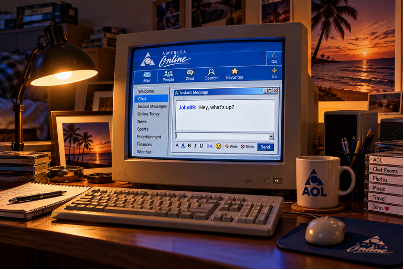
Technology was beginning to change how people communicated, and the internet was opening doors that had never existed before. For me, one of those doors led to a world I had spent much of my life believing was beyond my reach. That door was AOL. It might sound quaint now, but discovering online chatrooms was extraordinary. Suddenly, I could connect with gay men from all walks of life. Some were openly gay, others were closeted like me, and still others were trying to understand feelings they'd never fully acknowledged. For the first time, I could communicate openly with people who understood a part of me I'd spent decades hiding. I wasn't alone. That realization was liberating long before I ever found the courage to come out. Of course, the early internet also introduced another phenomenon: online pornography. Whatever its shortcomings, it played a role in my own journey. It allowed me to privately explore and finally acknowledge the attraction I'd spent so many years trying to suppress. But AOL offered something far more meaningful than images on a screen. It gave me the opportunity to connect with other gay men personally, to have conversations I could never have imagined having as a teenager, and eventually to explore relationships and physical intimacy in ways I'd denied myself for so long. For the first time, I was allowing myself to experience a part of life that had always felt forbidden. And something remarkable happened. As I began satisfying that long-suppressed physical longing, I discovered that it was only part of what I'd been missing. I wanted more. I wanted the emotional connection, the companionship, the tenderness, and the security of sharing a life with someone. I wanted the ordinary, beautiful things I'd seen other couples enjoy: affection without fear, commitment without secrecy, and the simple freedom to love someone openly. I wanted a husband. I wanted a home and a future built around the man I loved. And perhaps for the first time in my life, I understood that what I'd been searching for wasn't simply the freedom to be gay.
It was the freedom to love and be loved.
That realization would lead me toward the final—and most meaningful—chapter of my journey.
Part Three - Love
After a few months of exploring AOL and chatting with other gay men, something remarkable happened. What had initially felt unfamiliar and even a little intimidating gradually became a comfortable part of my life.
At first, I was discreet and apprehensive, still carrying the habits of secrecy I'd developed over so many years. But the more I connected with other men, the more comfortable I became. I discovered a place where I could finally be myself without feeling embarrassed or ashamed of who I was. For the first time in my life, I felt like I belonged. I was finally in my world, and what a wonderful discovery it was to realize how many other people inhabited it.
As my confidence grew, I began exploring the physical intimacy I'd longed for since my teenage years. I met two men, and those experiences allowed me to satisfy a part of myself I'd spent so many years denying. I even remained friends with one of them for a couple of months.
But something was missing.
As meaningful as those first experiences were in helping me accept my sexuality, I soon realized that physical attraction and intimacy weren't enough. There was no deeper emotional connection, no shared longing for a future together, and no sense that either of us was looking for a lasting commitment. And that was what I wanted more than anything. I wanted someone I could talk to about everything and nothing. Someone who made me feel comfortable, understood, and loved. I wanted the affection, companionship, and commitment that I'd watched other couples share throughout my life. I didn't just want to experience being gay. I wanted to experience being in love. Of course, there was still one enormous complication: the Air Force.
I remained acutely aware that my sexuality—and certainly a relationship with another man—could jeopardize my military career. The secrecy I'd lived with for so long hadn't disappeared simply because I'd begun accepting myself. But something inside me had changed. For years, fear had dictated what I could acknowledge, what I could experience, and how I could live. Now, for the first time, the desire to find happiness was becoming stronger than the fear of what might happen if I did. I knew the risks. I simply wasn't willing to let them decide my future anymore. I wanted a boyfriend. I wanted someone to love.
And that was that.
Then, one evening, after spending a few hours on AOL, an instant message suddenly appeared on my screen.
Four simple words: "Hey, what's up?"
I had no way of knowing it at the time, but those four words were about to change my life forever. The message was from John. What began as an ordinary online conversation gradually became something neither of us had expected. Over the next four months, we spent countless hours getting to know each other through AOL and telephone conversations. Somewhere along the way, friendship became affection, affection became love, and the future I'd spent so many years dreaming about began to feel possible. Eventually, we both knew what we wanted. We loved each other, and we wanted to spend our lives together. There was just one problem.
We were both serving in the Air Force, and we knew that building the life we wanted together wasn't possible under those circumstances. So we made a decision that would change everything. We chose each other. We traded our military careers for the opportunity to share a life together, openly and on our own terms.
When I think back to that sixteen-year-old boy on Long Island, desperately plotting his escape, I can't help but reflect on how extraordinary the journey turned out to be. Back then, I believed freedom meant leaving home and starting over. Later, I discovered that independence meant very little if I still had to hide an essential part of myself. It took years for me to understand that the freedom I'd been searching for wasn't simply the ability to live my own life. It was the freedom to share that life with someone I loved.
And as the story goes...We lived happily ever after.
Years later, when I finally began putting my experiences into words, I never imagined they would become a novel. I simply felt a powerful urge to share my story, not because it was extraordinary, but because I hoped it might inspire someone else who felt trapped by the same fears, expectations, or circumstances that had once held me back. If my journey taught me anything, it's that we all deserve the freedom to live authentically, to love openly, and to embrace the happiness that's possible when we stop allowing those invisible chains to define our lives.
That was the inspiration behind Unbound. And if there's one thing I hope readers take away from it, it's this:
You deserve to live your life unbound and free.