
Frontier Legacy
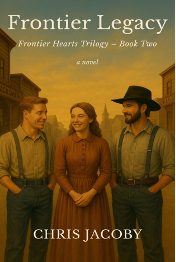
Curious about the story behind Frontier Legacy. In this Q&A, I answer some of the most common questions I’ve received about the second book in the Frontier Hearts Trilogy. From returning to Silver Creek to deepening the journeys of Nate, Jack, and Lillian, this story explores themes of justice, resilience, and belonging. I’ll be updating this page over time with new questions, so feel free to check back or drop a question in the comments and I will add it here.
✦ ✧ ✦
What inspired you to write Frontier Legacy?
After Frontier Kindred, I knew Nate and Jack’s story wasn’t finished. I wanted to explore what it meant for two men to build a life together in a world still learning to accept them. Frontier Legacy gave me the space to deepen that journey—tackling questions of community, legacy, and what we choose to stand for when the dust settles from the first fight.
How is Frontier Legacy different from Frontier Kindred?
Kindred was about survival, found family, and the courage to love in the shadows. Legacy is about what comes after—the fight to hold onto hard-won peace when new threats emerge. It’s more political, more introspective at times, but still rooted in the same emotional core: love, resilience, and quiet defiance in the face of pressure.
Why did you set this book in 1880, two years later?
The time jump allowed me to show real growth—of the ranch, the community, and especially Nate and Jack’s relationship. I didn’t want their life to feel stuck. Two years gave them room to build, and gave readers the sense that they’ve become a quiet, steady presence in Silver Creek. But with that stability comes new tension, and that’s where Legacy begins.
What themes did you want to explore in this book?
The idea of legacy—what we leave behind and how we’re remembered—sits at the heart of the novel. But I also wanted to explore institutional power: how systems can either lift people up or crush them, and what happens when good people confront that imbalance. There’s also a strong thread of mentorship, quiet activism, and healing from trauma.
Is there a scene in Frontier Legacy that was especially emotional to write?
Absolutely. Nate’s public stand during the council hearing was one of the most powerful scenes I’ve written. It was the culmination of years of quiet struggle, and I wanted his strength to feel earned—not flashy, just honest and resolute. I teared up writing the reactions of townsfolk who once doubted him. It felt like a full-circle moment.
Do readers need to read Frontier Kindred first?
I definitely recommend it. Legacy builds directly on the events and emotional arcs of Kindred, and while I worked to make it accessible, you’ll get a much richer experience if you start at the beginning. It’s a true continuation—not a sequel that resets, but one that grows from what came before.
Which character surprised you the most while writing Frontier Legacy?
Without question, Lillian. When I began the trilogy, she was intended to provide Nate with a family connection and emotional support as he started a new life in Silver Creek. As I continued writing, however, she gradually took on a much larger role than I had originally envisioned. Her growth felt completely natural, and by the time I was plotting Frontier Legacy, she had become one of the story’s emotional anchors. Watching her mature alongside Nate and Jack was one of the most rewarding parts of writing the trilogy.
What do you hope readers take away after finishing Frontier Legacy?
More than anything, I hope readers close the book believing that kindness, integrity, and perseverance still matter. Frontier Legacy is certainly about love, but it’s also about community, standing up for what is right, and protecting the people and places that give our lives meaning. If readers walk away feeling hopeful and reminded that ordinary people can make an extraordinary difference simply by choosing courage and compassion, then I’ve accomplished exactly what I set out to do.
