
Unbound
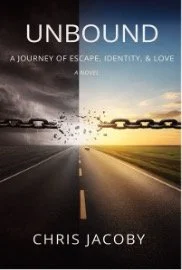
Set against a backdrop of personal struggle and self-discovery, Unbound is a powerful story about breaking free—both literally and emotionally. In this Q&A, I share insights into the book’s inspiration, the meaning behind the title, and how this deeply personal journey took shape on the page.
✦ ✧ ✦
Is Unbound based on your real life?
Unbound is a work of fiction inspired by my lived experiences. While some characters and events are drawn from real life, they've been fictionalized, dramatized, and adapted to serve the story's emotional arc. I changed names, created composite characters, and focused on a specific chapter of my journey--one of escape, identity, and love. It's not a memoir, but it is deeply personal.
Why did you choose the title Unbound?
I wanted the title to reflect what Andy’s life ultimately becomes—and to capture the core theme of the book: freedom. I’ve always been drawn to bold, one-word titles, especially when they’re used in unexpected ways to express something deeply personal. The original short story that inspired this novel was called Breaking Free, but I wanted a title that felt stronger, more timeless. Unbound means not just free, but unconfined, unrestricted, and emotionally unshackled.
After choosing the title, I realized there were other books out there with the same name. Rather than change it, I added a subtitle—not only to help differentiate it, but also to include the other major themes explored in the story. In the end, it was the perfect solution: the title remained powerful and personal, and the subtitle offered clarity. It felt like a win-win.
Are the characters in Unbound based on real people?
Yes, most of the characters are inspired by real people from my life. That said, every character in Unbound was fictionalized to some extent—names were changed, details adjusted, and scenes dramatized to serve the story. This allowed me to honor the emotional truth of my experiences while respecting the privacy and complexity of the individuals involved.
The Kramer family, for instance, reflects a very real and formative part of my journey. But even their portrayal was written with care, intention, and a blend of truth and fiction that allowed the narrative to unfold honestly without becoming a memoir. Unbound is, at its core, a fictionalized story rooted in my lived experience—not a literal account.
If Unbound is fiction, how much of it is actually true—and does that blur the line between honesty and storytelling?
That’s a question I’ve been asked a lot—and I think it’s an important one.
Unbound is fiction, but it’s fiction inspired by real emotion, real moments, and real growth. I’ve always been upfront about that. I chose to tell this story through a fictional lens because I wanted the freedom to explore the truth of my experience—not just the facts of my life. That’s the heart of what fiction can do: it lets you capture the emotional reality, the internal battles, and the personal truths in a way that sometimes pure autobiography cannot.
Every scene in Unbound was crafted with intention. Some moments are drawn closely from life, others are dramatized or reimagined to serve the narrative arc. But the emotional core—the struggle for identity, the fear, the longing, the hope—that’s all deeply real. That’s mine.
Fiction gave me the space to process, reflect, and create something that I hope resonates with others who’ve faced similar questions about who they are, how to escape pain, and how to find love. I don’t claim this story is the only truth. But it is my truth, told in the way that felt most honest to me.
One review on Amazon and Goodreads accuses the book of being dishonest. How do you respond?
Unbound is my truth--told through my lens, shaped by my experiences, and rooted in my emotional journey. I've never claimed it to be anyone else's story. Like many works of fiction inspired by real life, it reflects how I processed and survived difficult moments, not how others may have seen them.
Every memory carries perspective. What we choose to share, what we leave behind, and how we interpret the past are all part of personal storytelling. That doesn't make it dishonest--it makes it human.
No one gets to tell you how to tell your story.
This story was written with honesty, care, and deep introspection. It's not meant to offer an objective record, but rather a heartfelt reflection of identity, healing, and growth. For anyone who's ever struggled to live openly and authentically, I hope Unbound offers comfort, connection, and courage.
Why did you choose to leave out certain parts of your life, like your marriage or having children?
That's a thoughtful question--and a fair one. The short answer is: Unbound was never intended to tell the full story of my life. It's a deeply personal, emotionally driven narrative that focuses on one very specific journey: my path to escape, self-acceptance, and love. It's not a memoir of everything I've lived--it's a story about the emotional and psychological transformation I experienced.
Yes, my marriage and children were part of my life during that time. But thematically, they belonged to another chapter--another arc entirely. Including them would have added layers that didn't serve the story I was telling here. I wanted this book to stay focused on one central truth: what it felt like to live in silence, to slowly find the courage to live authentically, and to finally experience a kind of love I'd long denied myself.
I chose to write Unbound as fiction based on my lived experiences, which gave me space to craft the emotional arc without the burden of documenting every fact. That's not avoidance--it's storytelling. And I stand by that choice because it allowed me to go deeper into the heart of the journey I was ready to share.
Don’t you think your journey was a selfish one, especially since you admitted to leaving a marriage and children?
I understand why it may appear that way. And I don’t run from that perception. But the truth is—staying in a life where I was emotionally buried and living inauthentically would have caused more harm than good, not just to me, but to my family as well. I wasn’t leaving them—I was leaving a version of myself that was breaking down, quietly and painfully.
That decision wasn’t made lightly. It was made after years of inner conflict, reflection, and heartbreak. And as difficult as it was, I believed— and still believe—that choosing to live truthfully was the best path forward for everyone involved. Sometimes the most loving thing you can do is stop pretending.
From the moment I walked out of the family home, my children and I maintained an unbreakable bond. That connection has only deepened over the years. In fact, my kids have often said how lucky they feel to have had four parents after their mother and I each remarried. But what’s stayed with me most is something they’ve echoed time and again: their lives are happy because their parents were happy. And that, to me, says everything.
Were there any scenes that were especially difficult to write?
Absolutely—several scenes forced me to pause, reflect, and push through some very raw emotions. Writing about Andy’s childhood, especially the abuse he endured from Daniel, was particularly tough. Many readers—including some of my own family members—commented that they were surprised I chose to tone down the abuse in the book. That was a deliberate decision. I wanted to focus more on the emotional and psychological toll rather than the physical violence, which, while very real, risked feeling gratuitous on the page.
The opening scene is a good example. It was heavily fictionalized to soften the physical intensity of what actually happened. The real-life incident that marked my breaking point at sixteen was far worse than what’s portrayed. Revisiting those memories was painful, and writing them—even in a toned-down form—was a challenge.
Other difficult scenes were the ones involving heartbreak—particularly Andy’s experiences with Bobby and Noah. Those chapters tapped into some very personal memories of loss, confusion, and longing. While they were fictionalized, they carried emotional truths that hit close to home.
How did you decide what to fictionalize and what to keep close to real life?
I chose emotional truth over literal retelling. That meant blending real events, feelings, and relationships with fictionalized scenes or composite characters to serve the story’s arc. This allowed me to protect privacy while still honoring the essence of what I lived through.
Was there a particular moment in Unbound that you knew you had to stay with exactly what happened in real life?
Absolutely. From the beginning, I knew that everything about Jason needed to stay true to life. How Andy and Jason met, how they fell in love, and how their story unfolded—those moments are real. While I fictionalized certain scenes for pacing and structure, the heart of their relationship was never altered.
One of the most pivotal moments I stayed faithful to was how Andy and Jason made the decision to leave the Air Force. The scene with Andy’s email to his commander, the subsequent meeting, and even the quiet, emotional moment with his boss in the hallway—those events are presented exactly as they happened. The email itself is word-for-word the one I actually sent my commander that morning. It marked a turning point in my life, and I didn’t want to dramatize or dilute it.
The only creative liberty I took in that sequence was the location. In real life, I was on temporary duty at Ramstein Air Base in Germany when I sent that email. But in the book, I adjusted the setting to better serve the narrative flow. Still, the essence of that scene—the courage, the vulnerability, and the finality—remains exactly as it unfolded in my life. I wanted readers to feel that authenticity because, for me, it was one of the most defining and truthful moments in the entire story.
Have your loved ones read the book? What has their reaction been?
Some have, and their reactions have varied—just as you’d expect with something so personal. Unbound was never meant to speak for anyone but me. My intention was to tell a specific story from my own lens, rooted in emotional truth. Those who understand that have shown incredible support and compassion.
What do you hope readers take away from Unbound?
More than anything, I hope readers feel seen. Whether you’ve struggled with identity, felt trapped by expectations, or longed for a life that felt more true, this book is meant to hold space for that journey. If Unbound helps even one person feel less alone or more courageous in their truth, then it’s done its job.
Will you write a follow-up to Unbound—one that includes other parts of your life?
I’ve thought about it. There are certainly more chapters to explore—including family, parenting, and finding peace after the storm. But for now, I’m focused on telling different stories that still echo those same themes of identity, love, and resilience. Never say never, though.
If Unbound had a soundtrack, what songs would accompany the story?
Oh, such a great question and fun idea. Music has always been closely tied to memory for me. Certain songs instantly bring me back to specific moments in my life, and many of those memories naturally found their way into Unbound. If the story had a soundtrack, these are some of the songs I associate with key moments in Andy’s journey—songs that capture the emotions, struggles, and triumphs that shape his path toward identity, freedom, and love.
Opening credits/Dinner scene with Daniel: Behind Blue Eyes — The Who. The slow, introspective tone of this song reflects Andy’s quiet inner world as the story opens and we begin to see the tension that exists within his home.
Andy & Bobby’s friendship: Drive — The Cars. This song reflects the quiet vulnerability of Andy’s friendship with Bobby and the confusing emotions beginning to surface beneath it.
Andy realizes he’s different: Only the Lonely — The Motels. The haunting tone of this song reflects the moment when Andy begins to recognize that something about him sets him apart, leaving him with feelings he doesn’t yet know how to understand.
Andy’s attempted kiss with Bobby: Save a Prayer — Duran Duran. This moment captures Andy’s first emotional awakening. Acting on feelings he barely understands, he risks a friendship that means everything to him. The moment is brief, vulnerable, and ultimately unresolved but it marks the beginning of Andy confronting the truth about himself.
Andy leaves home and joins the Air Force: Don’t Stop Believin’ — Journey. Leaving home to join the Air Force marks the first real step toward claiming his independence. While the decision is driven by the need to escape his father’s control, it also represents the beginning of a much larger journey. In that moment, Andy doesn’t know where life will lead him but he believes there must be something better waiting beyond the life he’s leaving behind.
The hallway confrontation with Noah: How Soon is Now — The Smiths. This moment represents one of the most heartbreaking realizations in Andy’s life. Discovering that Noah was also struggling with his identity—and that the two of them might have understood each other in ways no one else could—leaves Andy confronting the painful truth of what might have been. The moment is brief, tense, and unforgettable, marking the loss of a connection that might have changed everything.
Andy meets Jason and their connection begins: Everywhere — Fleetwood Mac. Meeting Jason marks the beginning of something entirely new in Andy’s life. What starts as a simple connection quickly grows into something deeper, bringing a sense of excitement and possibility Andy hasn’t felt before. For the first time, he begins to imagine a future where love and authenticity might truly be within reach.
Andy and Jason’s growing relationship and their decision to come out: Heaven — Bryan Adams. After meeting online, Andy and Jason’s connection deepens when Jason visits Omaha and the two finally spend time together in person. When Jason returns to Phoenix, the distance only strengthens their feelings for one another. In the weeks that follow, Andy realizes that what he has found with Jason is real—and worth fighting for. Their decision to come out together becomes the defining moment when love finally outweighs fear.
The drive from Phoenix to Omaha/Closing credits: Got a Name — Jim Croce. As Andy and Jason leave Phoenix behind and begin their drive toward a new life in Omaha, the journey symbolizes everything Andy has fought for—freedom, authenticity, and love. With the desert fading in the distance and the horizon stretching ahead, the moment represents the quiet but powerful realization that Andy is finally living life on his own terms.
If Unbound were ever adapted for film, this is the song I’d imagine playing as the car disappears into the horizon and the credits begin to roll.
